Definition:
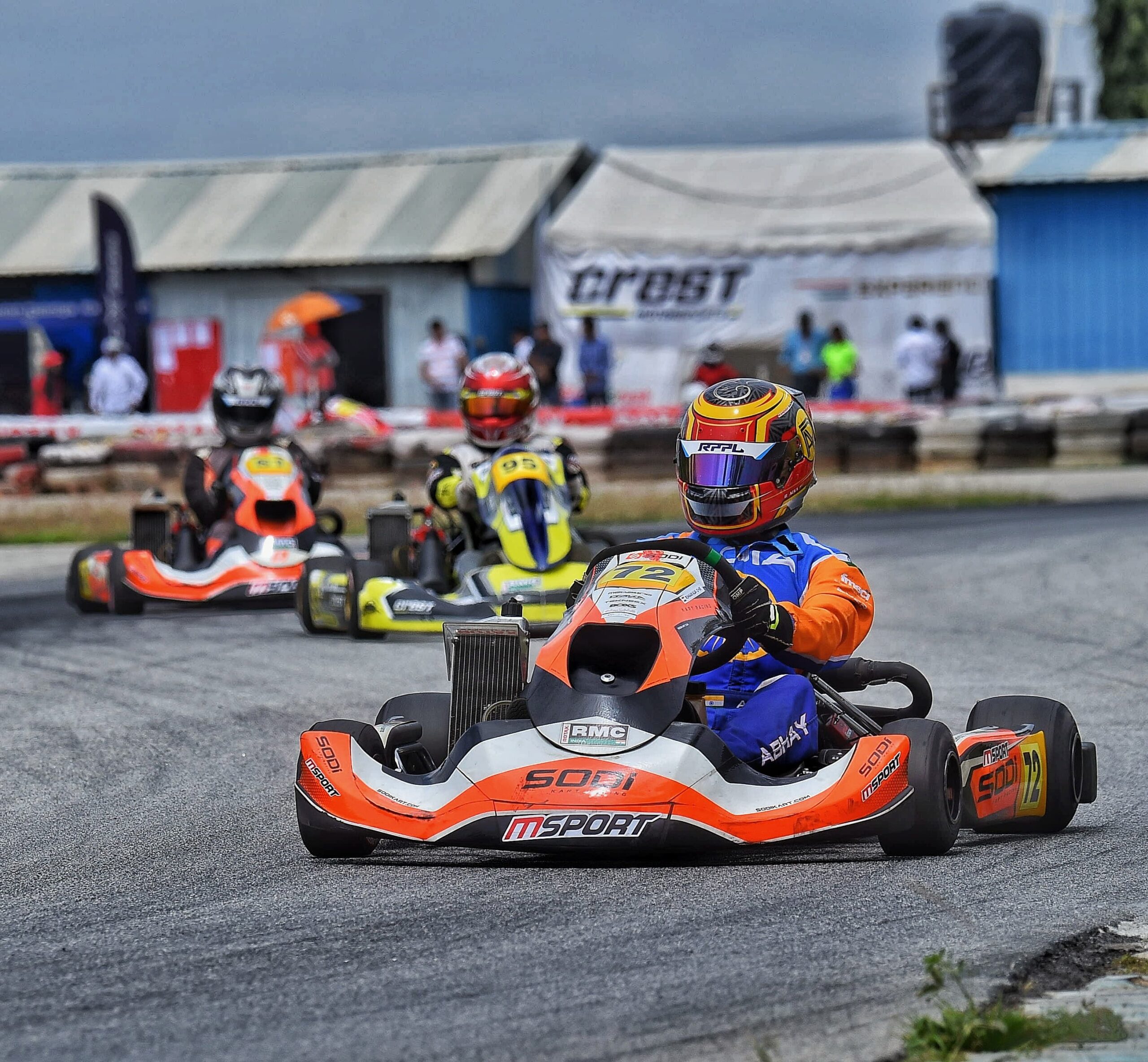
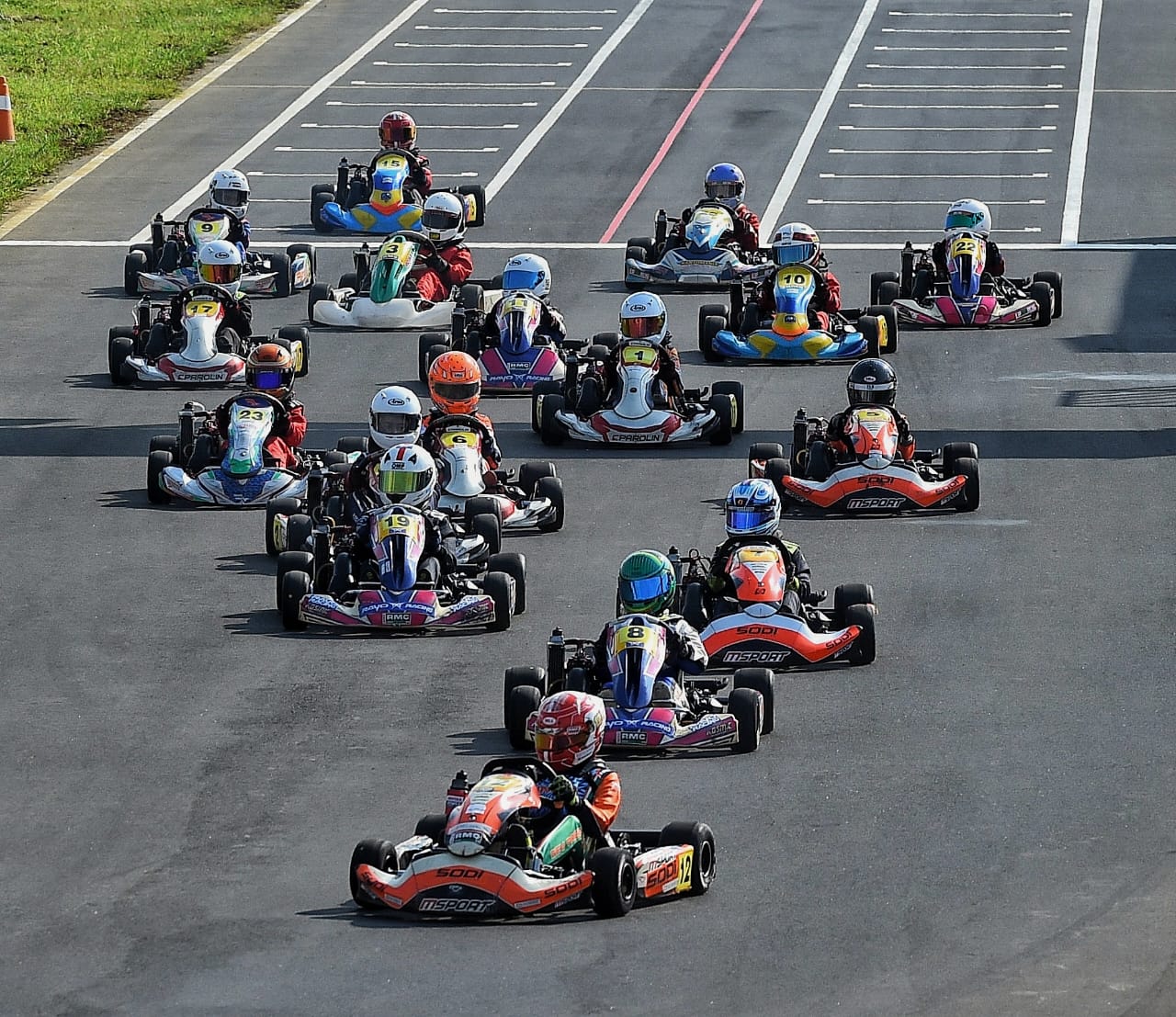
A kart is a single-seater land vehicle with bodywork elements but without a roof, cockpit or suspension. It has four non-aligned wheels that are in contact with the ground: the two front wheels control the steering, while the two rear wheels (connected by a one-piece axle) propel the kart. Only the tyres may come into contact with the ground when the driver is on board.
The main parts of a kart are the chassis, including the bodywork, the wheels and the engine. The driving position is on the seat, with feet to the front.
Importance of Karting :
Karting is widely recognized as the foundation of a racing driver’s development. It teaches the essential principles of racing—vehicle control, racecraft, braking, overtaking, and discipline. Its accessibility, relatively lower costs compared to car racing, and high competition make it the training ground for most professional drivers.
Every motor sport child / parents dream is to see their child in Formula 1 !!
According to FIA, the history of motorsport includes innumerable champions who stood out in karting before reaching Formula 1 or shining in other disciplines.
To name a few : Ayrton Senna, Michael Schumacher, Fernando Alonso, Kimi Raikonen, Sebastian Vettel, Lewis Hamilton, Max Verstappen, Valtteri Bottas, Oscar Piastri, Andrea Kimi Antonelli, Charles Leclerc, Alexander Albon, etc etc etc
Ayrton Senna on Karting : “Karting is the purest form of racing. It’s where it all starts. If you learn karting properly, everything else is just more power and speed.”
Lewis Hamilton on Karting : “I started racing when I was eight years old, in karts. Karting is the root of all motorsport and the most important time of your life as a racing driver.”
Hence, it is imperative that you undergo professional training under any karting training academies.
I am sure that you can easily find these out. They would be involved in the sport of Karting either as an organiser or a Team taking part in karting. To find out the organisers of Karting, you may head out to www.fmsci.co.in >> calendar and filter on “Type” Karting and click the “Search” button will list out the Karting events. If you click on “More Info” you will be able to see the organisers and their contact info.
Once you are confident, it’s time to apply for FMSCI Competition Licence, a mandatory requirement for you to take part in any FMSCI authorized Karting Competitions.
You can apply online at lic.fmsci.co.in.
But wait, you better understand the following before you jump in to the website and to avoid getting confused on what licence you need to apply as there are various types of Karting Licences.
1) Grassroot One Event (minimum 8 years in the year of application)
2) Grassroot One Year (minimum 8 years in the year of application)
3) One event(minimum 8 years in the year of application)
4) National Karting Mini ( minimum 8 years in the year of application – 11 Years)
5) National Karting Regular ( 12 Years and above)
These quotes underline karting’s significance—not just as a stepping stone, but as a core component of a racer’s identity and skillset.
Minimum Age:
In India, Karting can be started as early as 7+ (8 years in the year of application!).
The easy way to start karting is to go and practice a lot in the leisure karting tracks, one must be available near you.
But obviously that won’t make you a competitive karting driver !
In India, there are various levels (Status) of Karting Competitions. I will try to explain in simple terms.
Grassroots :
Basically for new comers.
Closed :
Closed for their Club Members only.
Closed Invitation :
Closed for their Club Members, but also open for few invitees.
Open :
Open for all, not limited to club members alone.
National :
Open for all at the National Level.
Challenge, Cups, Series, League etc :
Normally many rounds are held, participants earn points in every round depending on their position in that round and at the end of all rounds, the participant with the highest points is declared the winner of the Challenge, Cup, Series etc. Please note that they are not called “Champions” but “Winners”.
National Challenge, Cups, Series, Leagues etc. :
Similar to the above, but the winner is declared as “National Winner” “Indian Winner” etc.
National Championship :
As the name suggests, highest level of competition. Many rounds are normally held, participants earn points in all the rounds depending on their positions and at the end, the participant with the highest points is declared the “National Champion”.
There are other status like International etc. which we will discuss later.
So, the licence is linked to the status as below.
Status | Licence |
Grassroot | Only Grass root licence is allowed either one event (that is valid only for that event) or one year (that is valid for all grass root events in that year) |
Closed, Closed Invitation, Open | Minimum One event licence is required (valid for that event) or ClubSport (Valid for all Closed, Closed Invitation and Open events in that year) |
National, Challenge, Cups, Series, Leagues, National Championship | Minimum National level licence is required. |
But how does one know what event is happening, when, what is the status of that event etc. ?
Just visit fmsci.co.in >> Calendar menu. Here you can find out the date, venue, status, organisers etc. You may filter the events based on Status, Category, Period, Type etc. Very flexible.
2025 Cost of Karting Licences:
1) Grass Root One Event : Rs.100/ (inclusive of GST)
2) Grass Root One Year : Rs.300/ (inclusive of GST)
3) One Event : Rs.250/= (inclusive of GST)
4) Club Sport Karting : Rs.350/= (inclusive of GST)
5) National Karting Regular, Mini : Rs.2500/= (inclusive of GST)
OK now you
1) Know how to get experience in karting by practicising in leisure karting
2) Know how to get training in competitive karting
3) Know the different status of karting competitions
4) Know the various types of karting licences
5) Know its costs
6) Know where to apply for karting licence
7) Know where to look for & find details of various karting events that is being organized
Ready for the next step to take part in the karting competition, and prove your mettle ?
Here is how.
1) Identify the event.
2) Write to the organisers and ask for Supplementary Regulations – The rules and regulations of the particular event.
3) Read and understand ( It may be little difficult in the beginning, but you will start understanding it when you start taking part and liaising with the organisers, fellow competitors etc.)
4) It should specify the Opening of Entries and Closing of Entries.
5) It should specify where you can get the Entry Form.
6) It should specify the various classes that are available. It would also specify if it is 2 Stroke or 4 Stroke. (see below)
7) It should specify the entry fees.
8) Fill in the Entry Form and submit it before the Close of Entries along with entry fee.
Now coming to the basic technical aspect. Normally what you practice in the leisure karting tracks would be 4 stroke karts and what you get trained for competition would be both 4 stroke and 2 stroke depending on the package you opt for.
Basic safety clothing requirement for 4 Stroke Karting :
Helmet : Minimum of ISI make helmets with closed face with Double D-ring straps.
Overalls : Full Sleeve leather / denim Jacket and full-length Jean trousers are mandatory.
Gloves : A pair of Gloves covering the hands completely
Shoes : Minimum a pair of good quality Fully covered Sports Shoes is mandatory.
Most probably it would be arrive and drive for 4 stroke karting event i.e. karts would be provided by the organiser.
Basic safety clothing requirement for 2 Stroke Karting :
Please refer safety requirements at 1738991240041_2025 FMSCI Safety Requirements for 2-Stroke and 4-Stroke Karting Final AK.pdf
I have tried to explain in as much details as possible but if you ask me if that is all, the answer is a big NO.
If you have any specific query, you may ask, will try to address the same.
All the best to our future Karting Heroes !
Post Views: 483