
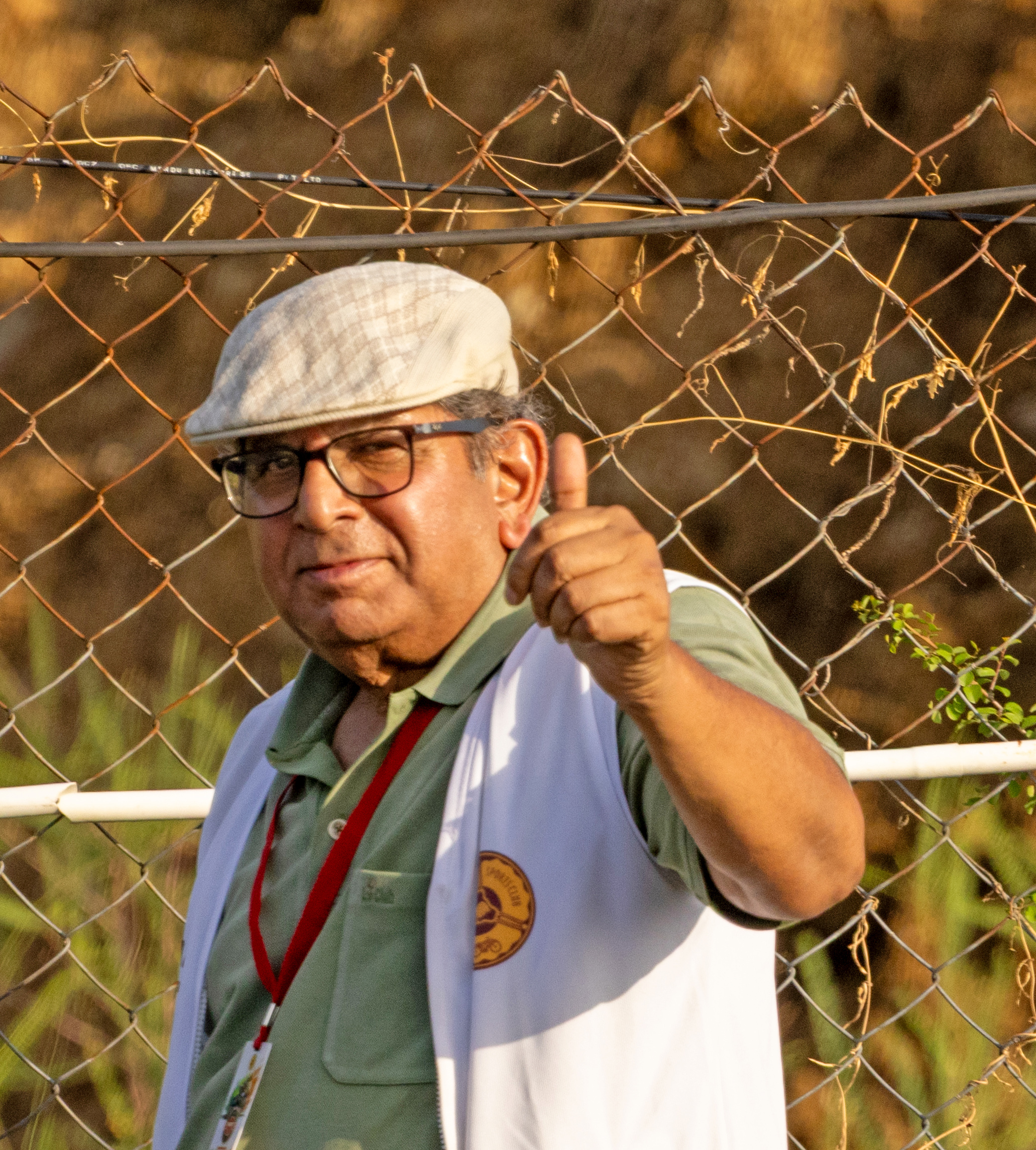
In this episode we interVIEW Mr. Shyam Kumar, Chairman of the FMSCI Karting Commission.
We’re excited to hear his insights on the evolution of karting, the challenges ahead, and his vision for the future of Karting in India.
Let’s go Karting !!!
How would you describe the current state of karting in India, both in terms of participation and infrastructure?
The state of Indian karting is one of promising growth but concentrated development.
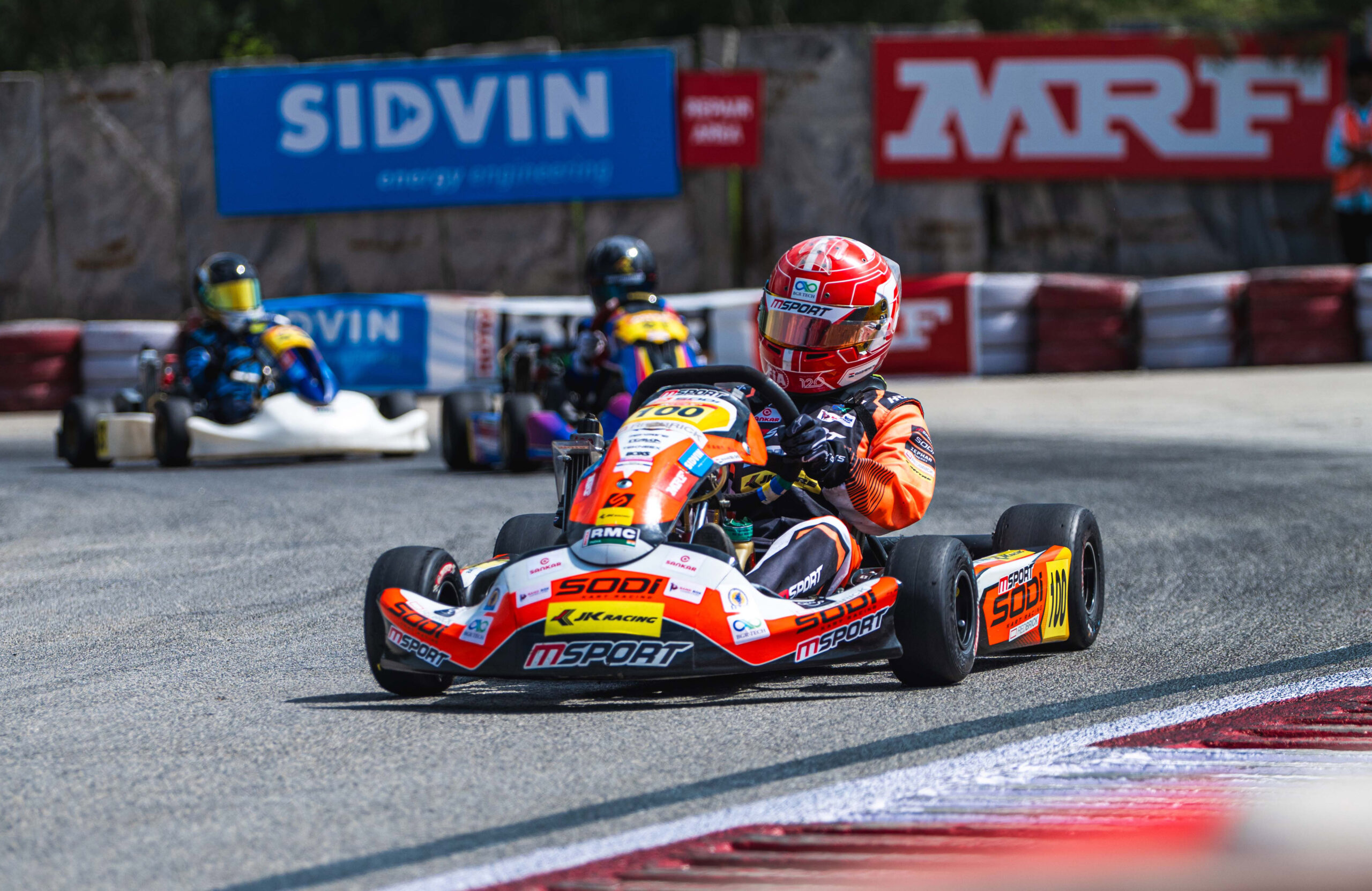
Participation is steady in our flagship series, the MECO FMSCI National Karting Championship – Rotax Max Classes, which serves as the premier ladder. We see strong, competitive grids, in the Mini Max, Micro Max, Junior Max and Senior Max categories, indicating a healthy influx of new, young talent. The number of participants in Rotax has been consistently increasing with one of the largest grids in the Asian continent, providing a solid national platform.
However, the true participation base—the foundation—remains too small, primarily due to cost and regional access limitations. World-class infrastructure exists, but it’s geographically limited but we have close 100 recreational go-kart track with a circuit at Leh Ladakh at the North (World’s highest altitude go-kart tracks). Cities like Bangalore (Meco Kartopia), Chennai with a CIK – Grade 1 C license circuit (Madras International Karting Arena – MIKA), and Coimbatore (CoASTT) have circuits that meet international standards.
What are the biggest challenges facing karting as a grassroots sport in India today?
The single biggest roadblock is Affordability and Accessibility.
A competitive season in the National Championship, including karts, engines, tyres, travel, and coaching, can cost upwards in lakhs. This is prohibitively expensive for a majority of middle-class Indian families, creating a massive filter
that screens out talent purely on financial grounds.
Geographic Concentration: As noted, the limited number of top-tier tracks means karting is not a truly grassroots sport that a child can casually try in their hometown.
Lack of Clear Ladder/Scouting: There is no formalized, nationwide talent identification program or scholarship system from the Federation. Talent discovery is currently dependent on private teams and academies.
Many F1 legends began their journey in karting. How well is India’s karting ecosystem positioned to nurture future international talent?
India’s ecosystem is improving and now has the essential facilities, but it’s not yet comprehensive.
The establishment of world-class facilities like MIKA, designed with input from international experts is a massive step. It means our drivers can now train and race on a track that simulates world-class conditions, eliminating the need to spend a fortune abroad just for quality track time.
The fact that our Rotax National Champions receive tickets to represent India at the Rotax Max Challenge Grand Finals ensures that our top talent gets direct, high-level international exposure every year.
Weakness: In the current system the progression from winning a national karting title to securing a sponsored seat in Formula 4 or European karting is often a sudden and difficult leap, almost entirely dependent on personal sponsorship.
What kind of support systems (coaching, sponsorship, exposure) are available for young karting drivers aiming for higher levels?
Support exists, but it’s primarily private and self-driven. Dedicated, professional karting academies and teams are the backbone of coaching, offering structured programs, data analytics, and experienced mentors,
often former racers themselves.
Sponsorship is nearly non-existent at the entry-level and only begins to appear for drivers who have already established a winning record and a significant budget. The FMSCI is actively working to commercialize and professionalize the national championships to attract corporate interest.
National Champions gain excellent international exposure through the Rotax Max Challenge Grand Finals. Domestically, media coverage for karting is growing.
Are there any standout Indian karting talents you believe have the potential to reach Formula 1 or other top-tier racing series?
While I cannot name individuals currently competing in the MECO FMSCI National Karting Championship for ethical and impartiality reasons, I can speak about the generation that has recently moved up.
Talents like Saishiva Sankaran & Ishaan Madesh are a great example of the karting ecosystem working, starting in karting, winning championships, and transitioning successfully into the current Indian F4 and National Racing
Championships.
We consistently see one or two drivers each year who display exceptional raw speed, consistency, and race craft that, with the necessary financial backing and European exposure, absolutely have the potential to climb the international ladder, including towards Formula 1.
What steps is FMSCI taking to improve karting infrastructure across different regions of India?
Our strategy is to focus on regional expansion and standardization. We are strictly standardizing track safety and technical requirements (Homologation) to ensure any new tracks meet minimum safety and competition
criteria.
We will be promoting Karting Slalom—a low-cost, accessible format using rental karts on existing recreational and professional tracks, cone-based tracks in cities without a circuit. This brings the sport to the masses and acts as a regional talent identifier.
Are there plans to introduce more affordable or accessible karting formats to attract newcomers?
Absolutely. The FMSCI believes that the future of Indian motorsport hinges on democratizing the entry point.
We are encouraging and will soon formalize a National Rental Karting Championship structure. This uses readily available, low-maintenance, and costeffective rental karts, allowing anyone to compete at a high level without owning
expensive race equipment. This vastly reduces the financial barrier for newcomers.
How do you see the role of private karting academies and tracks in complementing FMSCI’s efforts?
Private academies and tracks are our resources; they are the engine of development.
Training & Mentorship: They provide the day-to-day coaching, technical
support, and year-round track access.
Investment: Private entities are investing the capital needed for new tracks and infrastructure, like the new racing tracks being built in different parts of India.
Competition: They run the teams that populate the grid in our national championships. The FMSCI’s role is regulation, standardization, and providing the National Championship framework; the private sector’s role is talent development and execution.
Is electric karting gaining traction in India? What are your thoughts on its future?
Yes, and its future is bright.
Many new commercial rental karting centres are using electric karts due to their lower maintenance, instant torque, and zero emissions, which is excellent for indoor tracks.
The FMSCI is watching the global shift closely. Electric karts offer a level playing field, lower operational costs, and environmental benefits. We anticipate introducing an official Electric Karting National Championship or category in the near future, aligned with international standards (with FIA Electric Karting guidelines) as battery technology matures further for full-fledged racing.
How do you envision the role of digital tools (like simulators or data analytics) in training young karters?
Digital tools are essential for modern racing development.
Data Analytics: Young drivers are increasingly using on-board data logging (GPS, G-forces, throttle/brake input) to analyse their performance. This datadriven approach, often with a dedicated data engineer, is non-negotiable for
success.
Simulators: High-fidelity racing simulators are an affordable, non-weatherdependent way to learn track layouts, improve muscle memory, and practice race craft. Simulators will become a standard tool in all major academies,
complementing on-track training, not replacing it.
How does India’s karting scene compare with countries like Italy, UK, or Brazil where karting is deeply embedded in the culture?
We are a developing nation in karting compared to these heritage nations.
In Italy, UK, and Brazil, karting is deeply embedded; children often grow up with a kart. The competition is intense, and the sheer volume of participation drives excellence.
They have a far greater density of tracks, allowing for regional championships that feed into national ones.
Our champions, who succeed despite the challenges, often display incredible resilience, resourcefulness, and a steely determination that is highly valued on the international stage. We have the talent, but we lack the broad-based, affordable funnel that these nations possess.
Are there any international collaborations or exchange programs in the pipeline to help Indian karters gain global exposure?
Rotax Max Challenge Grand Finals (RMCGF): Our National Champions compete in this global event every year, racing against the best.
Private Team Initiatives: Many private Indian racing teams have international affiliations or are run by drivers with European experience, facilitating European training/racing trips for their top karters.
FIA Global Karting Plan: The FMSCI, through its affiliation with the FIA, is fully aligned with the global plan to make karting more affordable and inclusive, which includes potential opportunities like the ‘Arrive and Drive’ World Cup
formats.
What is your long-term vision for karting in India?
My long-term vision is to establish a self-sustaining, three-tiered ecosystem:
Mass Grassroots: A National Rental Karting Championship and Karting Slalom in every major city, serving as the first, affordable touchpoint.
Professional National Ladder: The MECO FMSCI National Karting Championship (Rotax) remains the premier, standardized platform for identifying and developing top talent.
Global Pathway: Formalizing an FMSCI Driver Development Programme that provides structural support for the top 2-3 national champions annually to race a full season in a recognized European or Asian karting championship, bridging the financial gap to Formula 4.
If you had unlimited resources, what would be your dream initiative to revolutionize karting in the country?
Goal: Construct a minimum of ten new, standardized, FMSCI-Homologated karting circuits—one in each of the country’s major geographical zones (North, East, West, Central).
Each track would be paired with a fully funded Regional FMSCI Karting Academy, providing:
- Free/Subsidized Training for selected talents.
- Fleet of ‘Arrive & Drive’ Race Karts to eliminate equipment ownership costs.
- Mandatory High School Integration for motorsports theory and engineering.
This would instantly resolve the accessibility and affordability crisis and exponentially increase the size of our talent pool.
What message would you give to parents considering karting as a sport for their children?
Karting is the purest form of motorsport and the true foundation for any professional racing career. It teaches your child valuable life skills: discipline, physical fitness, mental fortitude, engineering basics, teamwork, and how to handle high-pressure situations. It is a sport where gender and background are irrelevant—only raw talent and hard work matter.
However, be aware it is a significant commitment—of time, travel, and especially finance. Start with the affordable rental karting and FMSCI events to assess your child’s passion and aptitude before committing to the full national championship. If the passion is genuine, the FMSCI is working tirelessly to build a path for their talent to shine.
Wonderful interview with lots of inputs and long vision programs to make karting affordable to a middle class family kid who is about to enter motorsports
My suggestion to make much more aware of the sport( go- karting) all the schools should support this sport by encouraging thier school kids to participate in the entry level Karting programs in thier respective zones that will bring more people to this sport👍
Good interview, pls Add more pictures & graphics which will add colors to the screen.