
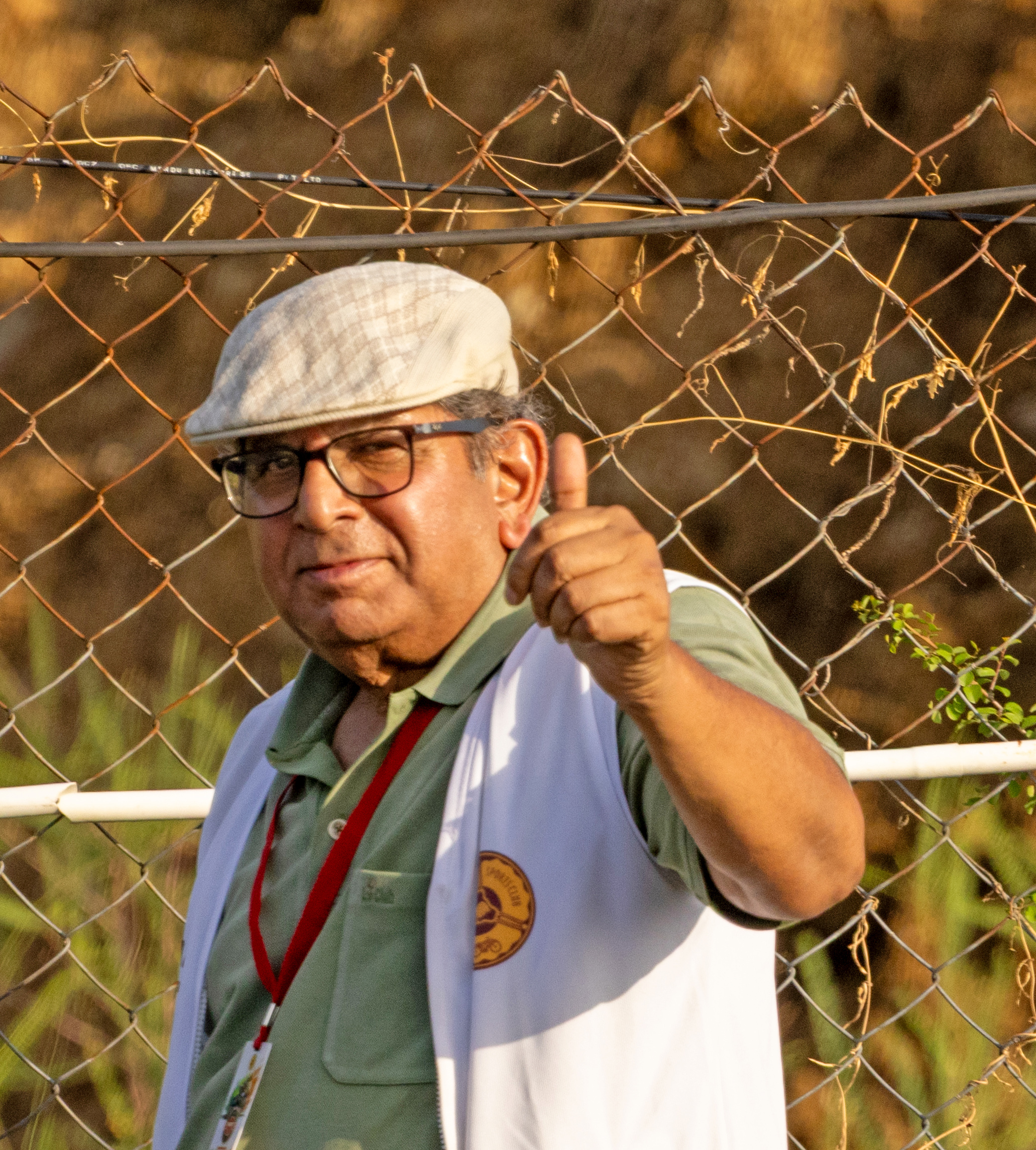
Today, we’re joined by Anand Philar—a veteran motorsports journalist whose pen
has chronicled the rise of Indian motorsport
for over three decades.
From the dusty rally trails to the roar of circuit racing, Anand has been a witness, writer, commentator, a self-taught photographer and advocate for sport’s evolution.
(all photos (c) Anand Philar)
What first drew you to motorsport journalism, and how did your journey begin?
AP : During my college days (Vivekananda College) in Chennai, I had heard about Sholavaram races but couldn’t afford the commute to the races in view of my meagre pocket money! Names such as Chandhok, Jayaram Special, Maharajkumar of Gondal and Vijay Mallya were familiar. During my holiday breaks in Bangalore, some of my friends who had ridden to Sholavaram on bikes and scooters (yes, scooters!) for the races, narrated their experiences, but they never quite registered in my mind.
After graduation in Arts, I took a diploma course in Journalism at the Bharatiya Vidya Bhavan in Bangalore, on the advice of my English professor who thought I could write a bit. As part of the diploma requirement, I did internship at Deccan Herald who subsequently absorbed me as a trainee reporter in 1977. One of my first assignments was the London-to-Sydney Rally which had a brief stopover in Bangalore. I was told to report the event since none of the seniors were interested or excused themselves since the stopover was scheduled for 9 pm in Indiranagar, then a remote suburb.
I got caught in the huge and over-enthusiastic crowd that was later lati-charged by the police. I took a few blows on my back and legs but managed to get some quotes from a few drivers (I can’t recall the names). Returned to office around midnight, tears in my eyes, torn shirt and an aching body. But I wrote the report which turned out to be an exclusive story and was given a big display with my byline.
The experience of seeing those powerful and colourful cars up close sparked an interest in me. However, I had to wait for a couple of more years for my next motorsport assignment – the K-1000. One afternoon, Gopinath Siva and a person named Sundaram Karivardhan dropped into the office. They met the Sports Editor, late Leslie Wilson requesting coverage of the K-1000. Wilson said the seniors were busy with other assignments. Kari pointed at me and said: “This young man should not be sitting behind a desk. Please send him to cover the Rally.” After some hesitation, Wilson agreed. And I jumped at the chance and my journey in motorsport began thus.
You’ve covered Indian motorsport for over 30 years. What are the biggest changes you’ve witnessed in the sport and its coverage?
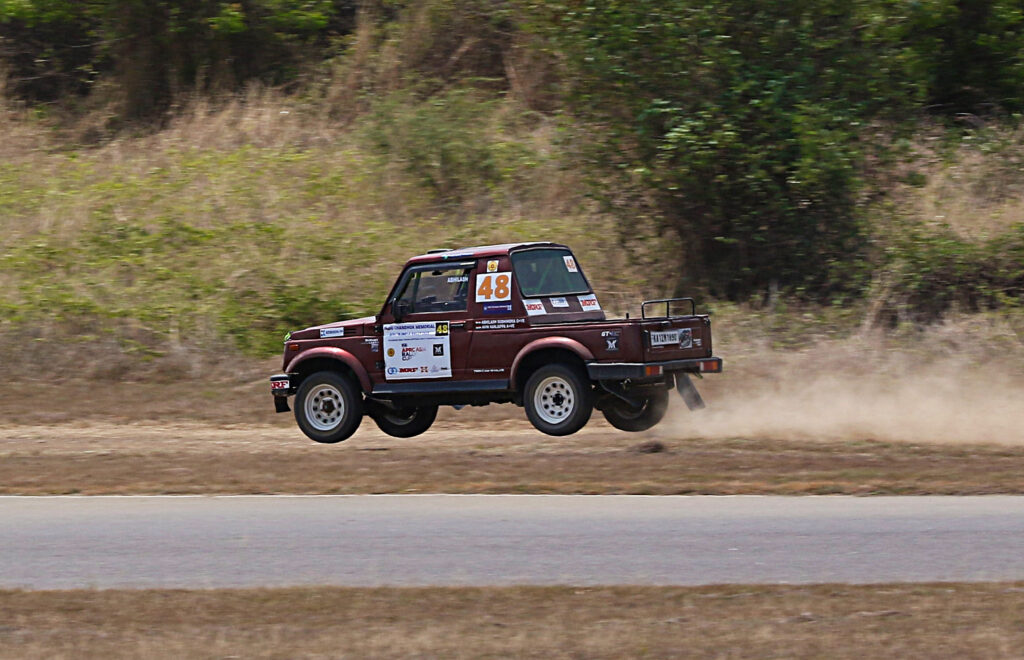
AP: One noticeable and significant change is the increasing number of girls and women participating in various disciplines of motorsport, ranging from Karting to Racing to Rally. They have no qualms in competing with their male counterparts, and in some instances, even winning in a mixed grid. The National champions are also getting younger by the season, and it augurs well for the future of motorsport in India.
Conversely, dwindling number of spectators for racing and rally events is worrisome, but it reflects the lifestyle choices one makes these days. Unlike in the past, people have access to live coverage of Formula 1, MotoGP, WRC and even international Karting and Touring Cars championships. So, they cannot sit through something that is at a lower level. Hence, only the genuine motorsport fan will attend a domestic event. The exceptions are motocross and such events that are high on adrenaline and excitement, while being a breathtaking spectacle.
Which moment in Indian motorsport history do you consider most pivotal—and why?
AP: The obvious answer is four-wheeler racing. Narain Karthikeyan and Karun Chandhok are products of National Championship and who reached the pinnacle of Formula One. The other example is rallying where Gaurav Gill marked his presence internationally by winning three Asia-Pacific Rally Championship titles besides scoring points in the World Rally Championship.
What’s your process for capturing the essence of a race in words—especially when the action is so fast-paced?
AP: A deep knowledge of sport is essential and non-negotiable. Getting to know the competitors through frequent interactions helps you to understand and digest the action you see on the track.
You’ve covered legends like Musa Sherif and emerging talents like Jehan Daruvala. What defines a motorsport icon in your eyes?
AP: Just two words – Commitment and Perseverance. The ability to deal with the lows (much more than the highs) usually defines the character. The commitment must be total and a willingness to pursue your passion and goals despite the odds set you apart from the rest.
How do you balance technical accuracy with compelling storytelling in your coverage?
AP: Writing is basically instinctive. Either you can write or you cannot. That is talent – the degree varies from person to person. Second is the technique and knowledge of the basics. Here too, it depends on the kind of writing you are doing. A simple, straightforward narration (a press release, for instance) must address the “5 Ws” – Who, Where, What, Why and When. Not necessarily in this order.
Knowledge of sport helps you to pick a highlight of the day’s proceedings. Once this is identified, the rest is a fine combination of talent and technique (as mentioned above) something that comes with experience. The more you write, without fear of making mistakes (which the best of us do make!), the better you get.
What’s the most challenging motorsport story you’ve ever had to report—and what made it so?
AP: Several of them. Basically, the Indian National Rally Championship rounds in the pre-internet / mobile phone days. Media was (and still is) low priority for the organisers. So, no “special arrangements” were made. As a reporter, I was left to my own devices regarding travel, accommodation and gathering information / results.
Rising before dawn, managing to hitch a ride to the Stages that were far, breakfast and meals left to chance, inhale plenty of dust or get soaked in rain, plead with the organisers for the results and once secured, race back to the hotel to type out the report. Then rush to the telegraph / post office, charm the nightshift guy to send your report via telegram or teleprinter on priority. Worse still, if the lines were down, place a trunk call to the office and dictate the entire report. Often, I missed breakfast, lunch and dinner. Late night and early start. Tough days.
The other tough assignment was the Desert Storm that involved daily commute of around 400 Kms from one city to next, walking in the desert carrying heavy equipment to pick vantage points for photography, reaching your overnight halt late, missing dinner, but typing the report and emailing it to the office, followed by processing hundreds of pictures for my Facebook album, sleep for an hour or two and then on the road at 4 am. On a couple of days, I covered the night stages too. After three consecutive Desert Stoms, I decided enough is enough.
Have you ever had a close call or unexpected adventure while covering a race?
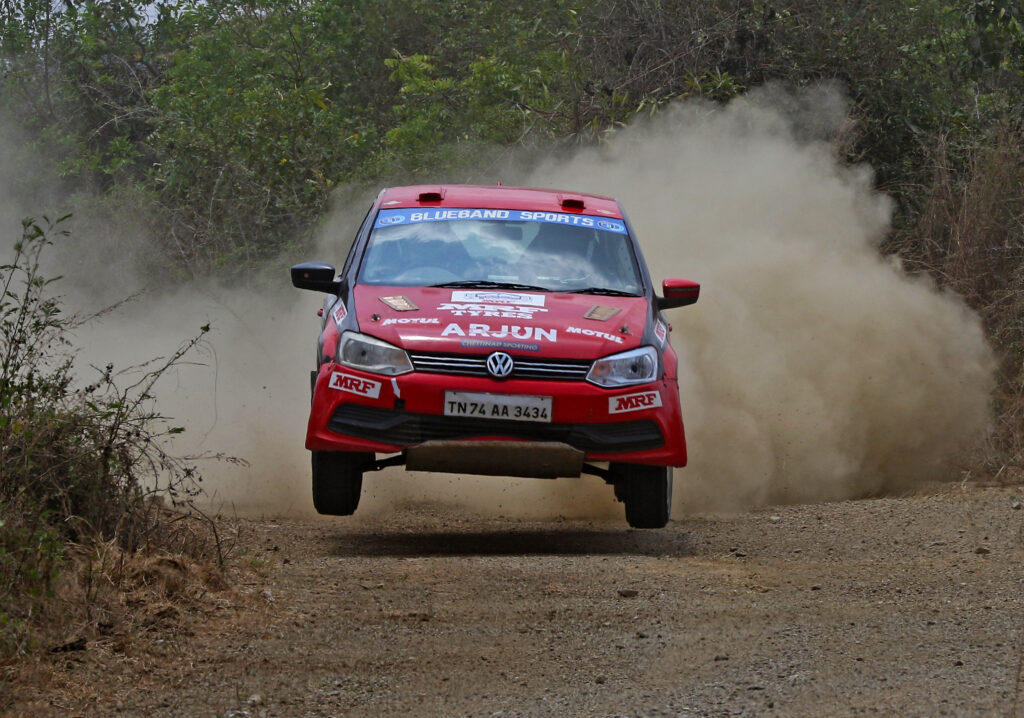
AP: I can recall one incident that still sends shivers up my spine. During Desert Storm one year, some of us walked in the desert seeking a vantage point. I was so intent on finding a spot far away from other photographers that I didn’t realise I had moved away from them. Suddenly, on climbing down a steep dune, I looked around me but couldn’t spot anyone. I was all alone, and not sure which way to go back. Strewn around me were skeletal remains of some animals. It was scary. The silence was “deafening” and the scorching sun unforgiving. Luckily, I followed my instincts, trusted my luck, and reunited with others after about an hour. Talk about luck!
What are the biggest hurdles Indian motorsport faces in gaining mainstream recognition?
AP: I have answered this in part earlier. There is no ready solution or a magic wand. It demands massive effort on multiple fronts by all stakeholders, injection of funds and a clear roadmap. First step is to dress up the events to project an attractive image, as is done in the Kabaddi Premier League, to facilitate television coverage. Overall presentation that is pleasing to the eye is essential. Heavy investment to secure Media coverage is necessary, by way of inviting mainstream Media houses. Pre and post-event marketing and publicity (like it used to be in the Sholavaram era) will greatly help to spread awareness and generate interest. On-site facilities and entertainment for the public (both paying and pass holders) must be put in place to attract spectators. Before all these are actioned, it is imperative that the stakeholders put their heads together and commit themselves to work towards a common cause. For sure, it is a long process that calls for patience and perseverance.
How has digital media changed motorsports journalism, and do you think it’s for better or worse?
AP: Certainly, the digital revolution has turned the Media scenario on its head. From my experience, fewer people even look at the print coverage but depend on it for sponsor presentation. Back in the day, competitors, sponsors and organisers used to thank the journalists for the print coverage. Now, such coverage is not even acknowledged. Easy access to social Media platform and its convenience, has lent some importance to digital platforms. A post on say, Facebook or Instagram or online Media, enjoys as much, if not more, weight than newspaper coverage. For all that, prospective sponsors insist on newspaper clips to verify achievements and credentials. Thanks to the various AI tools, digital content is not always accepted at face value due to possible manipulations, and it is here that the traditional print Media scores the big points.
If you could relive one motorsport event you covered, which would it be and why?
AP: The 2017 Coffee Day Rally which was the final round of the FIA Asia-Pacific Rally Championship. It was the event where Gaurav Gill sealed his third APRC title. The Coffee Day Rally, undoubtedly, is one of the best organized motorsport events in India, and which I have been attending, first as a journalist and later as the Media co-ordinator, since the early 1990s. So, there is a strong emotional connect, and to witness Gaurav Gill seal the APRC title with an outright win was simply thrilling and unforgettable experience.
How do you stay inspired after decades in the field?
AP: Simple. It is my undying love for motorsport which also gives me the joy to see others live my dream! I always wanted to race and rally, but for many reasons, couldn’t.
Your book “At the Wheel With Indu Chandhok” is an authorized autobiography of B. Indu Chandhok. What inspired you to document his journey.
AP: I knew Indu fairly well and always admired his sense of humour and positivity. A few months before his 80th birthday (22 July 2011), his son, Vicky, commissioned me to write the book which was to be presented to Indu besides to be circulated among his very close circle of friends. It was an enjoyable experience as I spent a lot of time with him at his home in Wallace Garden as he relived the halcyon days and, at times, going through the scripts. Indeed, it was a privilege to write the book.
If you weren’t a journalist, what would you be doing today?
AP: A rally / racing driver to begin with and later, into running a team.
What advice would you give to young journalists entering motorsport media today?
AP: Be committed to your profession and motorsport. Be fearless and truthful in your writing. There are no shortcuts to the top, but only hard work. Remember, Google provides you information, not knowledge which can only be gained by closely and constantly interacting with the competitors. Motorsport is complicated in terms of rules and regulations. Read and study the event documents BEFORE going to the event so that you do not waste time and embarrass yourself by asking questions for which answers are already provided in the documents. Most important – enjoy the highs and deal with the lows of your profession and career. Happy motoring!
Very interesting !
I am bedridden, so can’t go to events
.But Anand report is so informative that reading it transports you to the action spot.
Thanks Anand and please continue the good work.
God bless.
katana